


Explore the Living Garden
Keynoted by Larry Weaner
Saturday, March 21, 2026
9:00 a.m. - 1:00 p.m.
Cape Cod Regional Technical High School
351 Pleasant Lake Ave (Route 124) Harwich, MA
Why do our choices matter? “Explore the Living Garden” at the 2026 Spring Symposium and learn from three gardening experts how our gardens and home landscapes can be a source of environmental change as well as bring beauty and enjoyment to the gardener. Presenters include Larry Weaner, award winning landscape designer who paints gardens with native plants, Blake Dinius, educator from Plymouth County Extension on how little bees impact the big world and Mark Faherty, science coordinator at Mass Audubon’s Wellfleet Bay Wildlife Sanctuary and host of the Weekly Bird Report ON WCAI, on landscaping for birds, bugs and beyond.
Meet volunteers from Mass Audubon Wellfleet Bay Wildlife Sanctuary, the Barnstable County Beekeepers Association, and the Association to Preserve Cape Cod. Bring your garden questions for the "Ask a Master Gardener" table. Garden books will also be available for purchase from the Brewster Book Store.
Symposium registration: $40
The 2026 symposium fee includes refreshments, plus door prizes including plants, tools, gift cards, design books. Doors open at 8:30 a.m.
Advance registration is required; all sales final. Seating is limited, so please register early! See the online registration button below.
For more information call 508-375-6700 or email gardeners@capecod.gov
Speakers
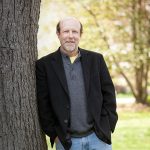 Larry Weaner
Ecological Design as Garden Art: the Artistic Thread
Ecological design need not be a bitter aesthetic pill that one must swallow to do the right thing. The order inherent in our wild native landscapes is widely considered beautiful. By translating that ecology-based order into the aesthetically based language of fine garden design, the results can be more universally embraced. Larry will illustrate how this confluence of approaches can yield landscapes that are both ecologically productive and beautiful.
Larry Weaner, FAPLD, founded Larry Weaner Landscape Association in 1982 and New Directions in the American Landscape in 1990. His nationally recognized work combines horticulture, landscape design, and ecological restoration and spans more than 20 U.S. states and the United Kingdom. His book, Garden Revolution: How Our Landscapes Can be a Source of Environmental Change (Timber Press, 2016), co-authored with Tom Christopher, received an American Horticultural Society Book (AHS) Award in 2017. In 2021 he received the AHS Landscape Design Award and the Association of Professional Landscape designers Award of Distinction.
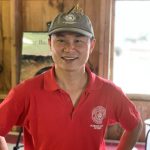 Blake Dinius
Little Bee, Big World
In this big, complex world, where exactly do bees and other pollinators fit in? Why are they so important and how do native bees and plants depend on one another? In this humorous presentation, Blake discusses why are small gardens and their smaller inhabitants influence our well-being in this region and how fostering native plants can help overcome threats to bees and all they contribute.
Blake Dinius is an entomologist and educator with the Plymouth County Extension Service. He graduated with a degree in Biology from the University of Massachusetts Boston. Soon after, he began a seven-year career in ecotoxicology, where he directed studies on bees, lacewings, springtails, earthworms and other critters. Blake offers programs on anything entomology related from pollinator gardener to tick bite prevention and guided butterfly walks.
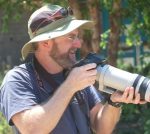 Mark Faherty
Landscaping for Birds, Bugs and Beyond
Mark will talk about his experiences gardening for wildlife both at home and at Mass Audubon’s Wellfleet Bay sanctuary, where he oversaw a complete redo of the pollinator garden and other outdoor spaces. He’ll cover the most important cultivated and wild plants to focus on to benefit birds, butterflies, bees and other wildlife, as well as what plants work or don’t work here on Cape Cod, land of hungry rabbits and annual droughts. He’ll also address other yard maintenance issues, like what “leave the leaves” really means.
Mark Faherty has been the Science Coordinator at Mass Audubon’s Wellfleet Bay Wildlife Sanctuary since 2007. While his current projects involve everything from oysters and horseshoe crabs to bats and butterflies, he has studied primarily bird ecology for the last 20 years. Mark’s Weekly Bird Report airs each Wednesday on WCAI, the Cape and Islands NPR station.